Alabama Real Estate and Community News

Sept. 24, 2024

What is a Bedroom

Let's start with a few sizes of items that are found in a bedroom.  Beds for example are this size and the room for an average human to move around a bed is approx. 24”+. Now keep in mind the minimum hall way size is 36” so if you have 36” between the bed and the wall that is a very good space.  Wheel chair movement through a home is minimum 32” with 36” of continues space, and turning radius of 60”.

  • Bed                       Size (w x l)      
  • Full Baby Crib       28” x 52”
  • Single                    30” x 75”
  • Twin                      38” x 75”
  • Queen                  60” x 80”
  • King                     76” x 80”

Add a bed side table at 24” wide.  A chest of drawers at 36” to 48” wide by 20” deep.  A bedroom dresser with a mirror are typically about 60” to 76” wide.

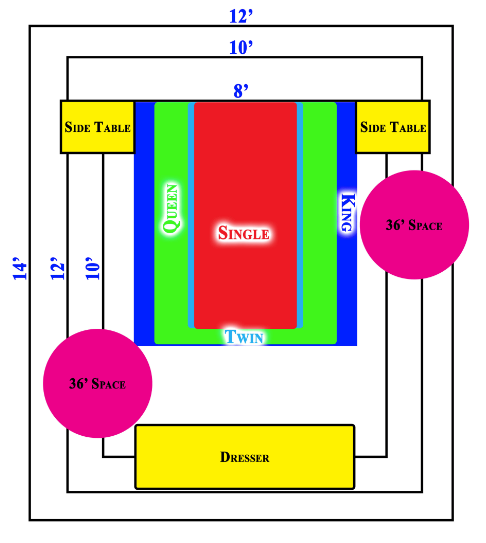
The minimum standard for a bedroom is 70 sq.ft., that is a very small room, 10’ x 7’ and no less than 7’ ceiling height.  Here is the layout of different sizes of beds and furniture in a number of different sizes of bedrooms.  Most new homes have bedrooms in the range of 12’ x 14’.

Bedroom Sizes

Looking closely at this diagram you will see that a king size bed, with two end tables, and 1 dresser in a 12’ x 14’ room is still tight.

Safety - Egress

Egress is the action of going out of or leaving a place. All home and buildings are required by code to have two egress points, and this is true for just about ever room in the house.  To be clear and Bathroom is not considered a room for the purpose of egress.  A bedroom MUST have two egress points, one MUST be a door, and the other MUST be a window.  The window must be no less than 5.7 sq. ft. so a fire fighter with a full set of gear, can get into the room to save people.  5.7 sq. ft. is based on the actual opening in the wall that the window is in, so the fire fighter can break out the glass and the hole will be no smaller than 5.7 sq. ft.  The minimum window opening size is 20” wide by 24” tall and no higher than 44” off the floor.  Depending on the state you live in, some states required the window to be 32” x 48” as a double hung window (double hung means you have two pieces of glass, one on top and one on the bottom, and typically at least one of the pieces opens).  Also keep in mind the larger the window the more natural light is let into the room making for a much more enjoyable living quarters.

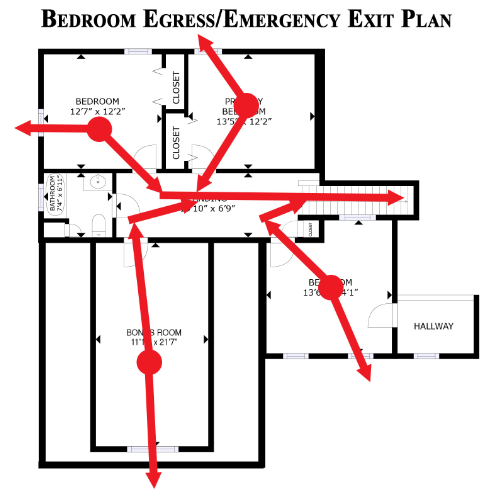
Every family should have a plan and practice it once a year in the case of a fire.  Here is a typical plan for a 4 bedroom second floor of a home.

Bedrooms have the highest search and value for homes and apartments.  The expression “Heads in Beds” is very true for just about all dwellings.  When selling a home, the more bedrooms, the more value to the home.  A home that is 4,000 sq. ft. with 2 bedrooms, on the same street as a home that is 3000 sq,. ft. with 4 bedrooms is worth less money assuming the same finishes in the home.  To this end the more bedrooms one has the better chance of selling the home for more money. 

Closet

It is believed that for a bedroom to be a bedroom it must have a closet, this is not true, as the town building department can and will classify a room with a door, and a window and no less than 70 sq. ft. as a bedroom assuming the home does not have utility restrictions (septic system restrictions).  Where the issue comes in is with FHA inspections.  When a buyer is pre-approved for an FHA Loan, the FHA inspector will review the home for safety concerns, and to determine the home is valid under FHA rules.  FHA DOES require a bedroom to have a closet.

Bathroom

Here is just a point to consider when looking at a home.  It is always ideal to have a full bathroom close to the bedrooms.  Many times we are asked to help sell a home with all the bedrooms upstairs and the full bathroom is down stairs.  As you can image this creates a logistical challenge every morning with showers and getting ready for school/work.  The new building codes for bathrooms make is much more affordable to build a bathroom on the second floor of a home today than in past years.  Talk to a builder about adding a bathroom close to the bedrooms before you purchase a home that does not have a close bathroom.

We hope you've found our Smith Lake-focused blog valuable and informative. Continue visiting us for more insights and tips tailored to the Smith Lake, Alabama, community. For unparalleled local real estate expertise, turn to The King Team at REMAX Patriot Realty, your dedicated partners in the Smith Lake region.

Posted in Resources
Sept. 24, 2024

What Does It Cost To Run A Home-Septic or Sewer

Septic or Town Sewer

For all builders town sewer is the best, but is it best for the home owner?  Lets do a few numbers to see if it works - a typically septic system costs between $15-50,000.  Then you are told to pump them ever few years.  The average life of a septic system is 40 years.  So lets go out 40 years and assume the system cost about $20,000.  It cost about $350 to pump the system, so if you have it done every 2 years that is about $7000 over 40 years, for a projected total of $27,000.  This is about $56.25 per month.    It you take the average home at 3.5 bedrooms, and assume they use the MAX of 110 gallons per day (not real as today we have so many water saving devices) that is about 440 gallons per day, and the average price for sewer in our local city is $4.21 per unit (unit is 750 gallons) so in this case the cost of the sewer for that one day is $2.46 per day or $74 per month.  Now that is a maximum number, lets look at a real set of numbers: 3 bedroom homes flushes the toiled 6 times a day, and has 3 showers a day, and does 4 loads of laundry a week and runs the dish washer 2 times a week.  When you add all this up you come to about 650 gallons per week.  This changes the cost per month to about $15.  So now take $15 and times this by 40 years and the projected cost could be $7,200.  You can see that the cost of a town sewer connection, is significantly less than a septic system in this case.  You should do your own research for the town you are considering moving to before you make the decision to connect to the town or install a septic system.

Septic systems are a way for your home or business to remove the waste water from the toilets, wash machine, dish washer, shower, sinks, etc. to tank in the yard. Commonly used in rural areas without centralized sewer systems.  Each septic system is designed to meet the needs of the building that is attached to it.  A septic system is made up of a tank(s), a distribution box, and a leaching field.  The tank(s) are sized to the number of bedrooms.  The Title V rule is 110 gallons per bedroom, times 2 gives you the tank size. Example:  4 bedrooms times 220 = 880 but you must have a minimum tank size of 1500 gallons.  Now each town could have different rules, so you should check with your local health inspector.

A typical septic system has the waste water flow into the tank(s), the solids sink to the bottom and the oils and items lighter water float on top.  Inside the tank is a pipe that allows the water from the tank, about 6" below the top water level, out to a distribution (D Box) box.  [Now this is not the way if you have an engineered system, I discuss this later on in this article.]  The reason for the pipe that is below the water level is you do not want the items that are floating on the top of the tank to get into the leaching field pipes as this will clog them and cause the system to fail. 

This "D' box as they are called is a way to distribute the Gray Water (water that does not have solid waste) out to the leaching field pipes that have holes in them, and are buried in the ground in the yard .  The gray water is absorbed into the ground.

In Massachusetts we have Title V. Title V is a set of rules defining the proper function of a septic system.  When a house that has a septic system is to be sold, the owners should have a Title V test done of the system.  They come to your property, most times with a small excavator, and dig down to the D-Box, and the septic tank covers.  They take the cover off the D box and put a camera up the pie to the tank, and then through all the pipes in the septic field.  They are looking for clogs or failures in the system.  Then they pump the tank, and inspect the tank.  Should they find all systems working fine, they complete the Title V report with a over view of the home/building.  The tank and system is designed for X number of bedrooms, so should the home/building have been modified to have more bedrooms then the system was designed for, the home should be sold as defined by the septic system capacity.

If you are building a new home or replacing an exist septic system, there are a few ways to have a septic system.  One is gravity fed, where the tank is down hill from the building, and the field is down hill from the tank.  This is the best system and in most cases is less expensive then the second type.  The second type is a raised system, this is created because the water table is too high on the property.  The water table determines the height of the septic field.  To determine the water table, test holes are dug in areas where the septic field is scheduled to be installed.  They pore 10 gallons of water into the holes and count how long it takes for the water to dissipate into the ground.  Along with this they look at the type of soil they dug up, and the ground colors, as this tells the experts on the conditions of the ground.  Should they ground water be at a level that requires a raised system, they will create the septic filed above the ground and then bring in special fill to make a large area for the septic field to drain property.  You will see this at lots of homes, as they have a large mound with a white pipe on it, this is the vent pipe (called the stink pipe).  This pipe is at the end of the septic filed and helps vent the field.

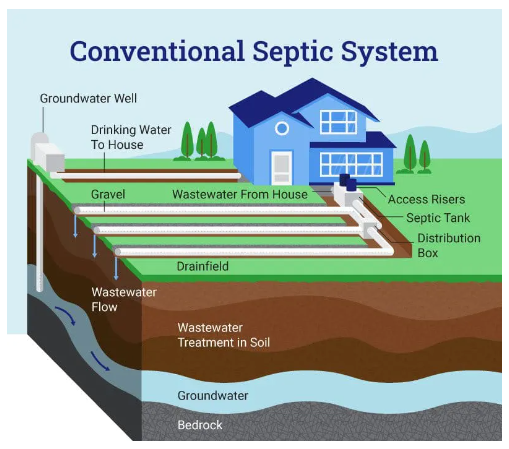
Here are the 4 major types of septic systems, the first is a standard, the following 3 are all engineered.

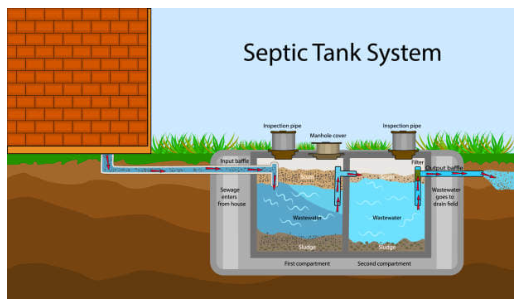
Diagram of a conventional septic system showing the flow from the house to the drainfield, including the septic tank and distribution box.

Conventional:

The system uses 1 septic tank for gravity fed, or two tanks for pump and grind system.  The gravity fed is just what it sound like, all the water flows down hill.  First into the tank, typically 1500 gallons, then to the D Box.  The D Box distribute the gray water to the leaching field.  The leaching field is perforated pipes in the ground that leach the gray water back into the porous ground.  The Pump & Grind system consists of a smaller tank that is down hill from the home.  All water and solids flow to the small tank. In the tank is a grinder pump that grinds up all the solids and pumps the gray water and the solids up hill to the septic tank.  Then the systems works just like a gravity fed system.

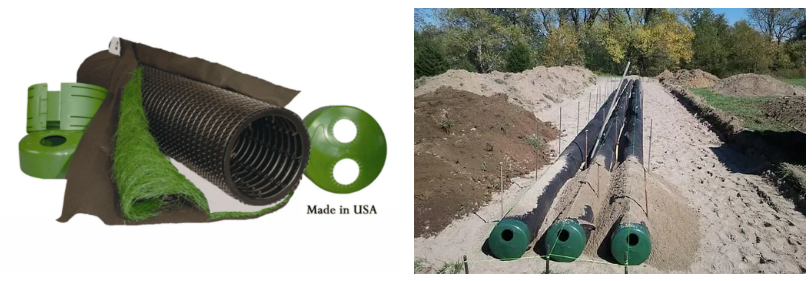
Septic system component showing a black perforated pipe with green fittings and fabric, labeled 'Made in USA.'   

Presby:

By utilizing simple yet effective natural processes, the Presby Treatment System treats septic tank effluent in a manner that prevents suspended solids from sealing the underlying soil, increases system aeration, and provides a greater bacterial treatment area (“biomat”) than traditional systems.  The system uses the same tank, same D Box, but the difference is the distance between the pipes in the leaching field, and each of the pipes is wrapped with a special material to slow down the drainage process into the ground.  Presby systems are used when the ground has a slow perk rate and/or you need to build the field in a tighter space by putting the pipes closer to each other.

Anaerobic:

Anaerobic septic systems involve the use of bacteria that don't require oxygen to live. In an anaerobic system, you've got a septic tank with two main pipes. One of these goes to the house, and the other heads out into your yard. That main pipe splits into several pipes that sit just below the surface of your lawn.

Inside the septic tank, solid waste settles and is eaten by the anaerobic bacteria. Liquid waste floats to the top. Wastewater from the tank moves out to the smaller pipes under the surface, which have holes at their ends. The wastewater then filters or "percolates" out into the soil.  Typically this system uses two tanks.

Aerobic:

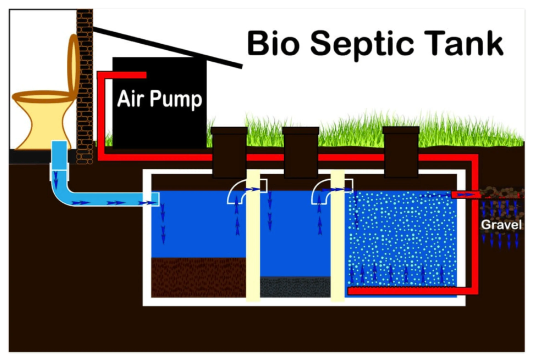
An Aerobic Wastewater Treatment System - often called an Aerobic Septic System - is a small-scale sewage treatment system similar to a septic tank, but which uses an aerobic process (adding air or oxygen) for digestion rather than the anaerobic (without air) process used in septic systems.

Adding air promotes the growth of organisms that break down the solids, which are put through a clarifier and chlorinated for disinfection which produces a cleaner, more environmentally friendly discharge. This cleaner discharge eliminates the need for a drainage field (leach field) allowing the system to be installed on a small property where a standard septic tank system would not have been possible.  Typically this system uses 3 tanks and is ideal for areas where the space for a septic system is very small and/or close to a body of water and no room for a proper septic system.

We hope you have enjoyed this BLOG, please keep coming back for more helpful information.

About The King Team

David & Fiona King - The King Team, are a dynamic duo leading a group of seasoned professionals specializing in various real estate sectors. The team's broad expertise spans new home construction, sub-division and land development, commercial property, and multi-family and single-family homes.

David and Fiona are committed to making the buying or selling journey enjoyable and informative. The team prides itself on excellence in customer service, always prioritizing their client's interests in every transaction. Contact them today to get started!

Beyond their real estate prowess, The King Team also holds expertise in Lake Home Sales & Acquisition, Land Development & Commercial Real Estate, providing a comprehensive service to their clients. The team is devoted to realizing their clients' real estate dreams and is eager to cultivate long-lasting relationships built on trust and mutual respect.

David & Fiona King - The King Team, have over 40 years of experience and over 125 five-star reviews. With their top-tier service and professional guidance, you can confidently navigate your next real estate journey.

NO OTHER AGENTS do what the KING TEAM does for their sellers. From the custom signs, large EDDM mailers, 3D Virtual Tours, and so much more – call the King Team to discuss listing your home. Call 888.THE.KING - 888.843.5464

Posted in Resources
Sept. 24, 2024

What Does It Cost To Run A Home-Heat

HEATING

There are so many ways to heat a home today, from hot water to electric.  Let me take you through them all to give you a better understanding.
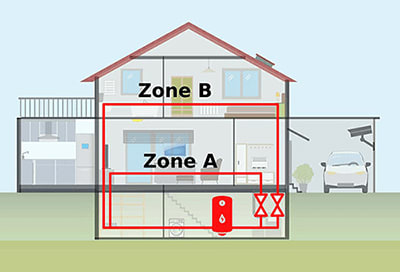
Zones – A zone is a part of the home that is controlled by a thermostat that controls the amount of heat to that part of the home.  The more zones the more control you have over the heating in the home.  A great home for heat efficiency will have a zone in the master bedroom, 1 in the living room area and typically include the kitchen and dining room.  One in the bedrooms upstairs, 1 in the basement, and sometimes 1 in the garage.  The more zones the more expensive the system is to install but the more you save down the road in fuel costs.  For example: You only sleep in the master bedroom from 10:00pm to 7:00am and you like to sleep at 70 degrees.  So you set the thermostat to 70 degrees for the time from 10:00pm to 7:00am and the rest of the time you set it at 62 degrees.  If you work during the day then set the home at 62 from 8:00am to 4:00pm and then when you get home at 5:00pm the home will be warm for you.  If you have kids coming home at 3:00pm then move the heat to start at 2:00 so the home is warm for them.  Follow this logic around the home and you can save hundreds of dollars over the year.  Believe me if you plan on staying in the home for many years the savings will be much more then the increased cost of the installation.  Plus your home’s value will be higher with the extra zones.

To get heat into a home you need a fuel, the most common are heating oil, natural gas, propane, wood, and electricity.
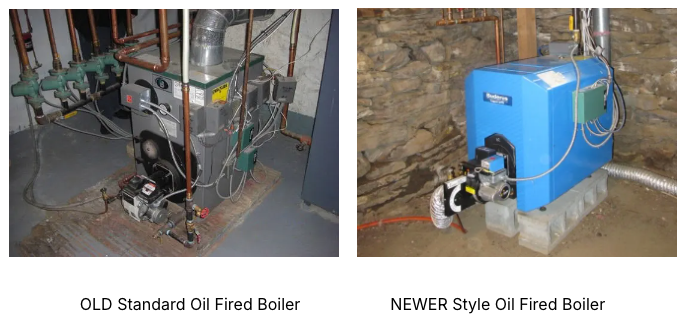
Oil is a very common way to heat your house.  Basically home heating oil is the same as diesel fuel, the only real difference is that diesel you purchase from the pump has a die in it to make it colored so if you get caught with home heating oil/non marked diesel in your vehicle, you could be in for a hard time from the state.  Plus diesel in the winter time has an additive in it to help stop it from freezing.  So if you run out of home heating oil, and you cannot get the oil person to come out right away, get a 5 gallon gas can, make sure it is empty, go to the gas station and get 5 gallons of diesel and put it in your home heating oil tank.  Then you need to purge the oil lines on the burner motor and you are up and running.

For companies that sell home heating oil, the largest selling feature is it is Safe and you have many choices of companies that sell home heating oil.  This is true, you will never hear of a house blowing up from an oil spill.  Oil fuel is so safe, that it is hard to set on fire, and no spark will ignite it!  What they do not tell you is that oil when burned is about 80% efficient – depending on your boiler.  So for oil and gas to be the same value you would have to use up 20% more oil to get the same as gas.  Plus an oil fired furnace (called a boiler) should be cleaned every year.  This typically ads a cost of about $400 per year to your bill to heat your home.
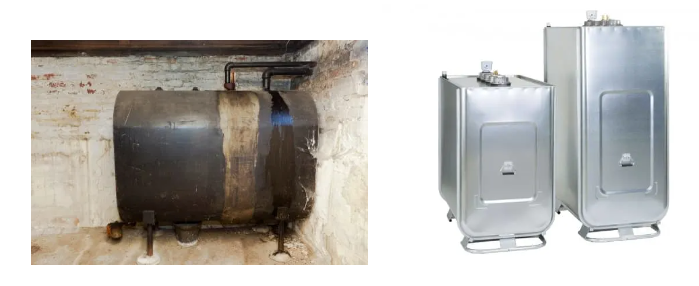
One thing to consider is that you must always check your gauge on the oil tank, just like your car, unless you are on auto fill from your oil company.  Oil tanks come in two types, the old standard steel 250 gallon tanks, and the new dual wall modern tanks.  The old tanks today only come with a 3 year warranty, the new tanks come with a life-time warranty.  Yes the new tanks are more money but much safer and will last a long time.

Oil can run your boiler/furnace and hot water heater but not much else.

The price argument about oil being cheaper than gas, is very hard to make.  The problem is that when oil is down around $2 per gallon, a good argument is made that yes oil is cheaper, but as the price of crude oil jumps up, and it can drastically, this causes the price of oil to jump up.  Gas companies are much slower to respond, they can take months or a year to change the price either up or down.
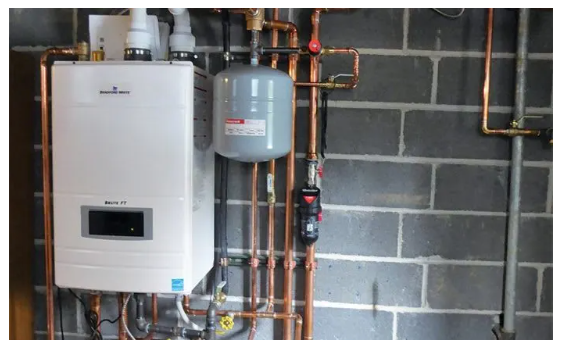
Natural Gas – this is a good choice for many people, but you must have natural gas on the street to get it in your home.  Natural gas comes from the large unity companies (National Grid, Unitil, etc.) and sometimes this is the same company that provides your electricity.  Natural gas can run your heat, dryer, stove, oven, hot water tank, gas grill, fire pit, lanterns, etc. 

You can convert many boilers over to natural gas, in a lot of cases the cost is about $2000.  This is something that the gas company might do for very little money or hire an independent HVAC person to do the conversation.

Propane - If you are in an area that does not have natural gas then you can choose to use Propane.  The same devices in your home that can run on natural gas can also use propane.  The only modification you must do is change over the gas flow control as propane is under much more pressure then natural gas.  These change over kits are not expensive, but most of the time require a professional to install them. 

A warning here, Natural Gas and Propane are very dangerous, do not attempt to work with any devices or appliances that use either of these gases or touch the gas lines as, this could cause a leak and this is how a home blows up!

Here is something that you might not know, when you order propane for your home or business this requires a tank.  Typically tanks are sized for the building.  These days most of them are under ground with the lines running under ground to the building.  Most tanks cost about $2500 installed but if you do not pay for the tank at the time of installation then you will be paying a more per gallon for your propane.  When I moved into our new home, the cost of propane was $3.10 per gallon, when I went on-line to check other prices I got prices of $1.58 per gallon.  WOW was I upset.  I found out that the difference was the price of the tank. So I asked the natural logical question “when I pay off the tank with the extra money I am being charged, will the price of my propane go down” and the answer was NO!  So basically after I have paid for the tank I will be paying 70% more for my home heating then the person that paid for the tank upfront. Plus, I am locked into this propane company for ever.  NOT COOL!

The price per gallon you get for propane is based on the usage.  Do not be shy to call the company and tell them what you are using.  I have my garage, BBQ grille, fire pit, and other devices connected so I get the best rate as I use a lot of propane. 

One more good bit is news, because I am using propane (or natural gas) I do not have to pay every year to have my boiler cleaned.  These gases burn at 99%+ efficiency. You should clean your gas fired boiler ever 4-5 years, as dust and dirt can collect in the unit.
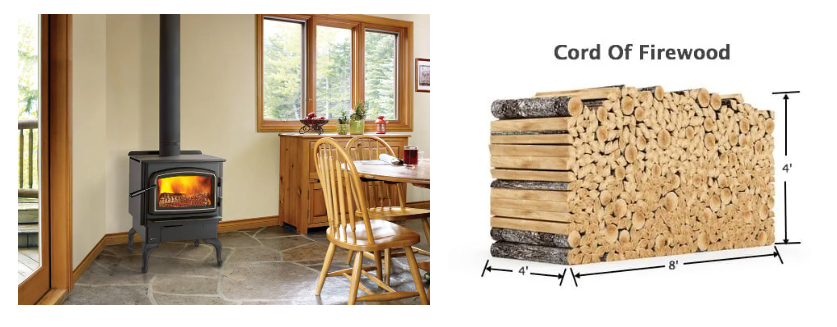
Wood stoves – are very popular in homes that have access to wood.  Wood stoves are a lot of work to keep running, as wood is dirty, heavy and you need a lot of it to heat a home.  You can spend a good part of the summer and fall cutting and chopping wood to heat your home over the winter.  You can also purchase wood, it is sold by the cord.  A cord of wood is a stack of wood that is 4’ x 4’ x 8’ in size.  Now most of the people that deliver split wood to burn just put it in a dump truck and call it a cord, so you are not assured of getting more or less than a cord of wood.  Plus if you want dried wood, that is a season old, or green wood that is freshly cut.  Dried wood is always BEST.

A cord of mixed hardwood, when burned, produces approximately 19 million BTUs of heat. It takes 135-140 gallons of #2 home heating oil to equal that amount of heat. A cord of firewood in this area costs approximately $250-$300 and #2 fuel oil fluctuates.  Oil prices would have to be at $1.85-$2.22 per gallon to equal the value of wood, but there is no labor involved in home heating oil.

Pellet Stoves - are great and clean and easy to run.  You buy bags of pellets, typically each bag is 40 lbs.  You get 50 bags on a 1 ton pallet.  Most stores that sell pellets sell them by the ton, and they are much less money by the ton.  Most of them deliver.

The cost of a ton of pellets is almost the same as a cord of wood but pellets offer 12% less volume then a cord of wood.  As a result to justify a pellet stove – assuming you already own the stove – home heating oil would have to be at $2.07-$2.50 to equal the cost of pellets. 

Keep in mind – using a pellet stove, or a wood stove, or a oil boiler/furnace, it all depends on the quality of the unit, the efficiency of the unit and how clean you keep it.

Oil in general is 80% efficient in boilers/furnace but some of the newer ones claim 90%.  Natural gas and Propane is at 78-89% efficient (most units today run at 98%).  Wood stoves are typically at 50-70%, and pellet stoves are at 79-83%.

Electric Heat - this was covered in the section called Electricity but lets just say this is a very expensive way to heat a home.

Now that you have a better understanding as to how the heat is created, now let me take you through how the heat is transferred to the different parts of the home.

The most popular is hot water or electric via baseboard heat or radiant heat in the floor (most radiant systems are water but some are electric).  The next is forced hot air from ducts through the house.  This is where you see holes in the floor and ceiling that are covered by vents covers.  Some vents feed the rooms with heat and the others take the air back down to the heating unit to recycle the air.  With a forced air system you can, in many cases, add A/C to the system.  With hot water baseboard/radiant, you cannot. 
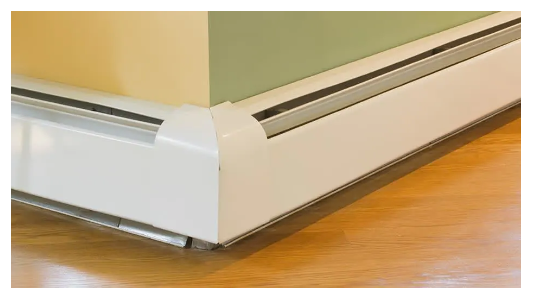
Hot Water Heat – Most homes use hot water to heat the home and all baseboard units that are not electric use hot water to distribute the heat around the rooms and the home.  Somewhere in the home is a unit that heats the water up and a circulator motor moves the hot water to different parts of the home.  1 circulator motor per zone.  Today many new homes are having tank-less on demand heating systems that heat the hot water as you need it.  Most of these systems use natural gas or propane to make the heat as they are very efficient and the units are about the size of one kitchen cabinet.  Older homes and homes that use oil to make the heat use a boiler (what some people call a furnace).  The boiler is a unit, typically found in the basement and it has a motor on the front that ignites oil mixed with air that is shot into a chamber that takes the fire and heats up chambers full of water.  As the thermostats call for heat, the circulators turn on and pulls the hot water from the boiler, the boiler sensor detects the water temperature dropping and starts up the blower motor.  
A boiler can also feed a hydronic system that sends hot air through the home.  These are the preferred system in most homes today.  The home will have a unit called an air-handler typically found in the basement and one in the attic.  The water lines are fed to the air-handler and as the thermostats call for heat the circulator sends hot water through the lines to the air-handler, a fan in the air-handler kicks on to force the air in the house through a unit inside the air-handler that looks like a car radiator.  In-fact the unit basically is a radiator but in reverse.  This system is chosen for most homes because it does not dry out the air, and allows for central AC in the home.
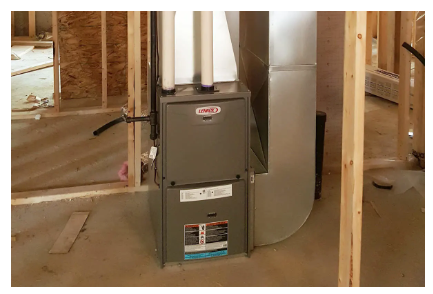
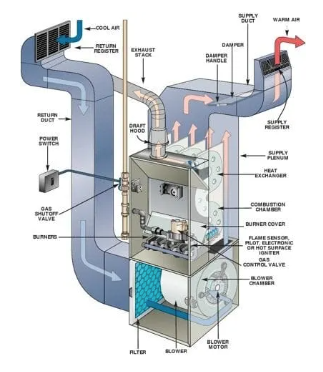
The furnace is a unit that heats air and then send the hot air through the home.  A furnace can use oil, natural gas, propane, wood, coal, corn, pellets, etc. to heat the air.  These systems are not as popular in new homes today because they do not allow for an AC unit to be attached to them for central air, and they dry out the air in the home more than the hydronic systems.

Heat Pump - In the BLOG called AC, I will review Heat Pumps as they are almost always part of a HVAC (Heating, Ventilation & Air Conditioning) system.

We hope you have enjoyed this BLOG, please keep coming back for more helpful information.

About The King Team

David & Fiona King - The King Team, are a dynamic duo leading a group of seasoned professionals specializing in various real estate sectors. The team's broad expertise spans new home construction, sub-division and land development, commercial property, and multi-family and single-family homes.

David and Fiona are committed to making the buying or selling journey enjoyable and informative. The team prides itself on excellence in customer service, always prioritizing their client's interests in every transaction. Contact them today to get started!

Beyond their real estate prowess, The King Team also holds expertise in Lake Home Sales & Acquisition, Land Development & Commercial Real Estate, providing a comprehensive service to their clients. The team is devoted to realizing their clients' real estate dreams and is eager to cultivate long-lasting relationships built on trust and mutual respect.

David & Fiona King - The King Team, have over 40 years of experience and over 125 five-star reviews. With their top-tier service and professional guidance, you can confidently navigate your next real estate journey.

NO OTHER AGENTS do what the KING TEAM does for their sellers. From the custom signs, large EDDM mailers, 3D Virtual Tours, and so much more – call the King Team to discuss listing your home. Call 888.THE.KING - 888.843.5464
Posted in Resources
Sept. 24, 2024

What Does It Cost To Run A Home-Generators

GENERATOR

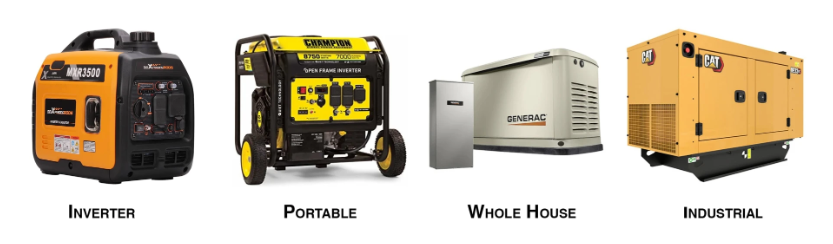
A generator is a motor driven machine that uses a fossil fuel powered motor to drive a coil that produces electricity.  Generators come in all different sizes, from small units, that are inverters (they convert low voltage electricity to high voltage) all the way to huge units that power towns.  The most common ones that most people know about and see in the stores and at people’s homes are inverters, portable generators (typically heavy and on wheels), and whole house generators.

When you consider adding a generator to your home you need to review all the options.  Most importantly is HOW MUCH POWER do you need to run the home with a generator.  This is not a difficult answer, just look at your electricity bill.  You should see how many kW per month you are using.  As we discussed in the previous BLOG called Electricity, we reviewed the different appliances, and other items in the home that use electricity.  The BIG items that burn the most amount of power are Well Pumps, AC units, Stoves/Oven, and old appliances.  Just a well pump can require 1,400 watts, but they do not run long, but they must have the power to get started.

Generators come in many sizes and options.  If you are going to purchase a generator for your home but you also want to use it for other things, then a portable unit is best.  Gas is your WORST ENEMY for generators, as it is for many items that use GASOLINE but are not used very often.  Today most fuel stations sell gas with Ethanol in the gas, Ethanol tends to gum up if it sits for long periods of time.  So purchasing a portable generator that uses Gasoline could be a problem.  The manufactures tell you to drain the gasoline from the unit when not using it. – seriously?  Have you ever tried to do this?  I have and believe me it SUCKS!  Then when you want to use it, you can not find any gas….LOL. Or even more frustrating then this, is when you need it, you have the gas, and you start it, but it does not run property and keep stopping.  Then when the storm is over, and your $1500 portable generator needs to be serviced, and the service person tells you that the unit is not worth fixing because I left the gas in it for a few years and it is dead.  OUCH!!!

So when looking at a portable generator buy the one that runs on Propane.  Propane NEVER GOES BAD!  Plus if you have a few tanks around, you can also use them for the BBQ and other devices.

If you want a small unit that you can use at camp sites, or on small job sites, look into a Honda Invertor as they are very reliable and start every time.  They only produce about 1500 watts max.

All generators have a rating of constant watts and PEEK watts.  The constant watts is what the unit will give you every minute it is running.  The PEEK watts is what I can give you when something like a well motor kicks on for a second or two, but will not run at this PEEK watts for much more than a few seconds.

Most generators under 5000 watts are way too small to run a home.  Most of the time for the average home you need 7500 or more.  If your home has gas heat, town water, and gas stove, then you can use a smaller generator than a home that has all these devices running off electricity.

Whole Home Generators that are wired right into your home, are the ideal way to protect your home from power outages.  These units run on Natural Gas or Propane.  Should you not have natural gas, then make sure you have a large propane tank.  The average whole home generator run at 1400-2600 watts per hour and burns 1.5 to 2.5 gallons per hour.  So if you have a 250 gallon propane tank, that only hold about 210 gallons, this tank, assuming it is full when you lose power, will run for a max time of 5.5 days.  The larger generators will run for only about 2.5 days on one full tank of propane.  So if you have a large home, and most things in the home are run on electricity, then you should consider getting a 500 gallon propane tank if you do not have natural gas available.

Generator costs

Small 5000 watt propane powered generators cost around $2200.  Keep in mind you need to have an electrician hook up a disconnect on your power panel in the home, and an external power plug for the generator to connect to.  Plus you must do this manually, meaning you must wheel the generator out of the garage, connect the power cable to the house and the generator and go down to the power panel and switch over the power to the generator, all this in the dark!  You can expect the disconnect and external box for the generator to cost between $500 and $1000.

If you want to consider a whole house generator, then this is a much larger expense, but a fully automatic power system that will turn on the second the power is lost to the home.  You do not have to do anything, they even test the system every week to make sure it is ready for the failure!  Now for the cost:  The generator cost for just the unit range from $4000 to over $12000, the average home has a 24 kw unit at $6000.  Now this is just the generator cost, the connection to the home, the propane tank or gas connection, this can take you to $12,000.  This is a serious decision for the home, and not one that most DIY people can or should do.

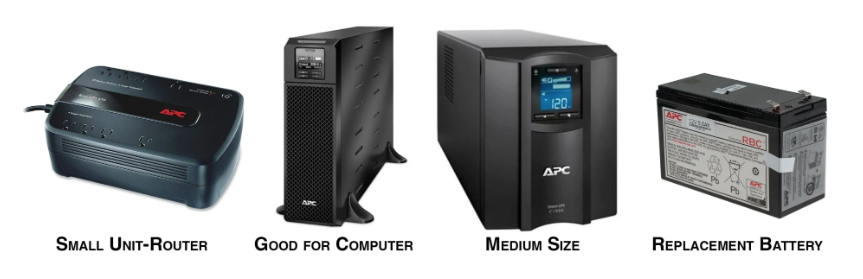
Back up power generators are fantastic, but some devices in your home do not do well with power interruptions (just .1 of a second can cause a router or cable box to go crazy).  Example are cable boxes, routers, and some smart TV’s.  If you own these devices, consider purchasing a UPS Power Supply (uninterruptable power supply).  I have a few of these in my home for all the devices that go crazy when the power does something unexpected.  These devices are not expensive, and over time you need to replace the batteries inside of them, so make sure when you buy them, get the ones you can replace the battery!  APC is one of the most popular manufacture of UPS Power Supplies.  The larger the unit the larger the battery, the longer it will last and the more devices you can attach to it.  In my office I have the larger one, and I can run for about 10 hours.

We hope you have enjoyed this BLOG, please keep coming back for more helpful information.

About The King Team

David & Fiona King - The King Team, are a dynamic duo leading a group of seasoned professionals specializing in various real estate sectors. The team's broad expertise spans new home construction, sub-division and land development, commercial property, and multi-family and single-family homes.

David and Fiona are committed to making the buying or selling journey enjoyable and informative. The team prides itself on excellence in customer service, always prioritizing their client's interests in every transaction. Contact them today to get started!

Beyond their real estate prowess, The King Team also holds expertise in Lake Home Sales & Acquisition, Land Development & Commercial Real Estate, providing a comprehensive service to their clients. The team is devoted to realizing their clients' real estate dreams and is eager to cultivate long-lasting relationships built on trust and mutual respect.

David & Fiona King - The King Team, have over 40 years of experience and over 125 five-star reviews. With their top-tier service and professional guidance, you can confidently navigate your next real estate journey.

NO OTHER AGENTS do what the KING TEAM does for their sellers. From the custom signs, large EDDM mailers, 3D Virtual Tours, and so much more – call the King Team to discuss listing your home. Call 888.THE.KING - 888.843.5464
Posted in Resources
Sept. 24, 2024

What Does It Cost To Run A Home-Electricity

COST TO RUN A HOME?

ELECTRICITY

This document is part of a series designed to help you understand how it works and what you can do to save money or make your home run more efficiently.

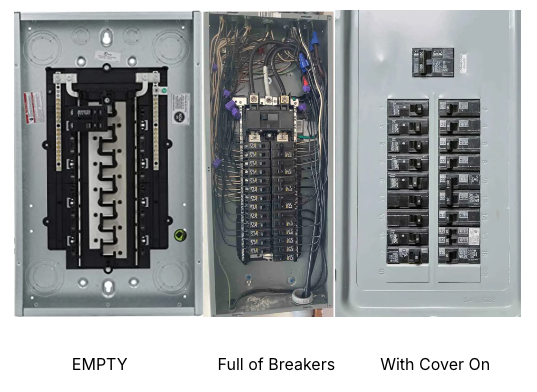
First lets start with electricity in north America.  ALL homes have 220/240 volts coming into the home.  They are broken down to 3 wires into your home; Two HOT wires with 110/120 volts per wire and one Common Wire that does not have electricity running through it, but connects to the pole and the town/city.  In your electrical box are two BARS (as they call them), each bar has one charge of 110/120 volts to it.  So when you look at your electrical box you will see some breakers with just one switch and some with 2. The 2 are all 220/240 volts for items like dryers, stoves, AC, Heat, etc.  All the single switches are for standard plugs, lights, and items in your home that only use a single plug to run them. 

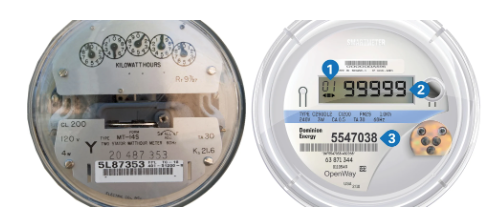
These are the two types of electric meters you should see on your home or business.  The one on the left is the standard older version, mechanical, and the one on the right is the new digital meters.  The newer meters communicate with the power company and have intelligence built-in so they can talk to the power company and give them statistics on your power usage.

Electricity is all MATH – yes sorry but no surprise here, you can calculate the cost of anything if you know the following:

Watts          Amps          Volts

AMPS x VOLTS = WATTS      WATTS ÷ VOLTS = AMPS

All electric costs are based on WATTS used.  Now the bills are a little confusing because you see a cost of the actual electricity at, lets say, $.12 per kw.  This means that for every 1000 watts per hour you use, you pay $.12.  What you must read farther into your bills is the other costs, like delivery, taxes, etc.  In Massachusetts today the rates range from $.21 to over $.38 with all the fees in the final number (for our examples we will use National Grid at $.27).  In Alabama with Cullman Electric the total delivered cost is $.1257 (12.5¢).  Based on these numbers if you have a 100 watt light bulb (the old incandescent ones) and you turn it on at 9 pm at night and in the morning you turn it off at 7am (10 hours), you have used up 1000 watts also known as 1 kW.

So lets do a little simple math:                          

100 watt light bulb on your back porch running every night from dusk (say 9pm) to dawn (say 7am) this is 10 hours at 100 watts.  This is 1000 watts – or 1.0 kW per day, times 31 days for a total of 31,000 watts or 31 kW.  Here are the costs for just that one old light bulb:

Mass    31 x $.27 = $8.37 per month for just one old light bulb

AL       31 x $.1257 = $3.90 per month for just 1 light bulb

Now lets look at the Security light on the garage, assuming you have a halogen light, that you put on at dusk and turn off at dawn.  These type of lights are typically between 150 and 500 watts.


                        Light Size                            MASS                       ALABAMA

                        150 watts (45kW)          $12.55 per month            $5.65 per month           

                        300 watts (90kW)          $24.30 per month          $11.31 per month

                        500 watts (155kW)        $41.85 per month          $19.48 per month

As you can see, the cost for just one 500 watt halogen security light if replaced would pay for itself in 2-4 months with a new LED light.

LED lights are rated in watts but this is to show you the equivalent output of a LED bulb vs a incandescent bulb.  So the package might way 100 watt bulb LED, but the actual watts used is about 17 watts.  Meaning you can use a LED bulb 590% more for the same money as an incandescent bulb of the same watts. 

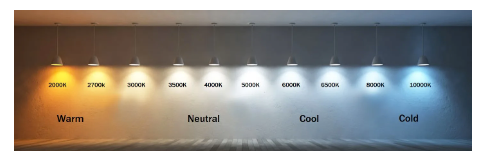
Since I am on the topic of LED, it is much more common with LED to have a rating called Kelvin and/or Lumens.  Kelvin is the temperature of the bulb what I call scale of light and Lumens is the intensity of the light.  Warm light is 2000-2700K, Neutral (soft) light is 3000-4000K and daylight is typically 5000K.  Most kitchens and bathrooms are daylight where living and dining rooms are more of a warm light.  This is all based on your taste, and has nothing to do with watts or power consumption.  The Lumens is how bright the light is, not the temperature.  So you can have a warm light that is equal to a 40 watt bulb or a 100 watt bulb.  You will know 5000k bulbs because this it what most of the new cars have for headlights!

Here are some of the appliances in your home today, assuming new and energy star (if possible).

  • Dryer – 1.5 kW up to 5 kW per hour
  • Stove Top – 1 kW to 3 kW per hour
  • Oven – 2 kW to 5 kW per hour
  • Fridge 100 to 400 watts per hour or 72 kW to 308 kW per month
  • Freezer 100 to 300 watts per hour or 72 kW to 216 kW per month
  • Dishwasher – 1200 to 2400 watts per hour
  • Wash Machine – 400 to 1400 watts per hour
  • Well Pump – 1400 watts per hour
  • Hot Water Tank – 1125-4000 watts per hour
  • AC Heat Pump – 900 to 9000 watts per hour (9000 for the heat coil backup), 1500-3000 watts for AC

Keep in mind most appliances you only use for a short time frame.  Things like Fridge, Freezer, Lights, Portable Heaters, etc. that you might leave on all day or 24 hours a day, are items you need to look at.  Items like hot water tanks, AC units, Heating Units, Dryers, Well Pumps, tend to use a lot of power, but only when they need it.  Most of these do not run all day long.

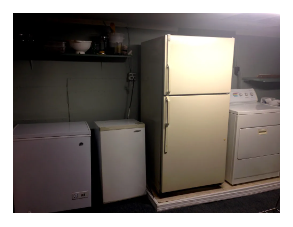
If you have an old fridge in your garage or basement that is keeping your beer and soda cold, you might want to consider getting a new smaller fridge as the old fridges typically use up 1,700 watts per hour or 1,224 kW per month = that is $330 per month in MA or $153 per month in AL.  Are you sure your cold beer is worth that?  You can pay for a new fridge in less than a year.

If the house you want to purchase has electric heat baseboard the electricity used is as follows:

225 watts per linear foot.  The most common sizes are 4’ at $35 each, and 6’ at $60 each.  The reason you find these in homes is the cost to purchase and install them is so much less then hot water baseboard.  Plus you can install them just about anywhere you have power.  Now keep in mind they need a dedicated circuit as they draw a lot of power!  And most of them use 220 volts.

So you have an old house with 4 rooms with electric heat, you can expect that for every 10 sq. ft. you will use approx. 10 watts per hour.  So a 10’ x 12’ bedroom that has an 7’ ceiling and the insulation is OK, could use approx. 400 watts per hour, and if heated every hour in the winter you can expect to pay about $2.00 per day or $62 per month, so 4 rooms would cost approx. $248 per month.

One more note – Home inspections are looking for failures in the home, a working electric heating system will not raise a red flag, but it will raise your blood pressure when you get your bill in January!

If you do not know what your devices are drawing for power in your home, you can purchase a Power Flow Meter from Amazon, Home Depot, Lowes, that you can plug in your device to one side of the meter, and the other side into the wall and the meter will tell you how much power the device is using.  Only works for 110 volt standard plug units.

We hope you have enjoyed this BLOG, please keep coming back for more helpful information.

About The King Team

David & Fiona King - The King Team, are a dynamic duo leading a group of seasoned professionals specializing in various real estate sectors. The team's broad expertise spans new home construction, sub-division and land development, commercial property, and multi-family and single-family homes.

David and Fiona are committed to making the buying or selling journey enjoyable and informative. The team prides itself on excellence in customer service, always prioritizing their client's interests in every transaction. Contact them today to get started!

Beyond their real estate prowess, The King Team also holds expertise in Lake Home Sales & Acquisition, Land Development & Commercial Real Estate, providing a comprehensive service to their clients. The team is devoted to realizing their clients' real estate dreams and is eager to cultivate long-lasting relationships built on trust and mutual respect.

David & Fiona King - The King Team, have over 40 years of experience and over 125 five-star reviews. With their top-tier service and professional guidance, you can confidently navigate your next real estate journey.

NO OTHER AGENTS do what the KING TEAM does for their sellers. From the custom signs, large EDDM mailers, 3D Virtual Tours, and so much more – call the King Team to discuss listing your home. Call 888.THE.KING - 888.843.5464
Posted in Resources
Sept. 24, 2024

What Does It Cost To Run A Home-Water

WATER Choices

Water is the most important part of the home, without water, you cannot move in.  Water comes to the property in 2 ways, a private well or town water. 

Private water typically is acquired from either a shallow well, typically not more than 15’ deep, and in most cases a large casing in the ground.  Many of these wells have a draw pump, this pump pulls the water out of the well and then pushes the water into the home.  These wells are old, and most towns will discourage and even disallow these wells.  The problem with these wells is that a large cap over the well top can be removed by a person.  Should a small animal, like a squirrel or mouse, falls into the well, this could contaminate the water and make you very sick.  Plus since these wells draw from water that is close to the surface, a spill of paint, chemicals, oil, etc. can get into the water supply, without you knowing, and poison the water.  Again you get sick.

A deep well where a well company comes to the property and drills a 6” well down into the ground until they hit water.  In many parts of our area the deep well is drilled into the ground, a steel casing is inserted into the ground to the level of the bedrock. Then they keep drilling through the bedrock until they get water.  Some wells end up 800’ in the ground.  If they get to a level that is considered deep enough, and they still cannot get enough flow (they want 5 gallons a minute, each town has a minimum Gallons Per Minute flow required), they will hydro-fractal the well.  This is where they bring in a large pump truck full of water, the force the water into the ground, hoping to open up lines in the bedrock and release the water.  If this fails, they have to move to a different spot on the property and drill again.  Ouch…  It is not uncommon to spend over $10,000 on a deep well.  Plus in most towns, the deep well must be more than 100’ away from any septic system.  That means 100' from the one on your property and your neighbor's property. Anything less could require a town variance.

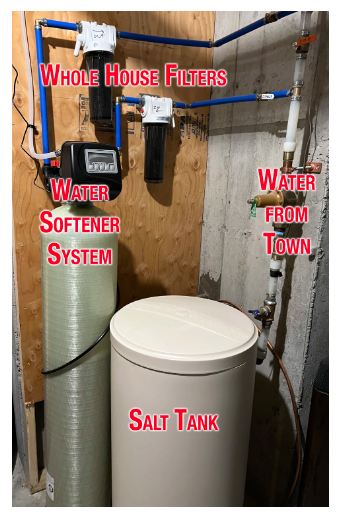
Well water, shallow or deep, can have a bad smell and taste and can be hard water. You can fix this with filters and a water softener system.  The filter you want is a Whole House Filter, get 2 of them. Put the white sediment filter into the first one and connect it to the water supply.  Then go from this filter into the water softener, then when it comes out go to the carbon filter (black). Now you have GREAT water, and all the water in the house, from the showers to the ice cubes are fresh and clean.

If you have high iron water, the water is rust-colored, get the salt pellets/crystals for the softener that are for high iron. They are about $1.50 more per bag and they work great!

The whole filter system costs about $800 if you install it yourself. And well worth it!

I have one in our home for the town water, and my water is great.  Here is a water softener system that has two whole house filters, a salt tank and a softener system.  This system is fully automatic and cleans itself every night at 2 am, but you must fill the sale container and change the filters when needed.

Town water is good and bad.  The good part of town water is that it is always on, even if the power goes off.  But you pay for it, in Massachusetts in the town we have a home the cost is $9.60 per 1000 gallons, but in Cullman AL the rate is $27.51 for the first 2,000 gallons (a monthly fee is in this cost) and after that, the rate goes down after you use 2,000 gallons.  Now some people think if they have a well the water is free, not true.  The pump required to get water out of the ground uses electricity and based on the BLOG-Electricity, the average well pump uses 1,400 watts per hour, so I would not expect it is not much of a savings over town water.  Plus you need a generator if you want water when the power goes out.  Now if you have an irrigation system, then that is a whole different set of numbers.   See BLOG-Irrigation Systems for more details.

A note about Town Water – Most towns add chlorine and fluoride to the water.  Both of these help keep the water safe and clean and help with children’s teeth.

Hot Water

Hot water for your bath/shower, sinks, wash machine, dishwasher, etc.  Today when a new home runs on natural gas or propane is typically produced by an on-demand system.  The same system that provides the hot water for the heat in the home, is the same unit that provides hot water.  The new on-demand systems have a separate water line for the hot water storage tank, where the rest of the home is controlled by the circulator pumps.


How the hot water storage tank (sometimes called a Superstore tank) works is that it has a coil in the center of the tank, that connects to the hot water line from the on-demand system.  So you have hot water going through a coil in the center of the hot water tank that heats the water. There's also a boiler that runs on oil, wood, coal, corn, etc., and can also run a hot water storage tank. 


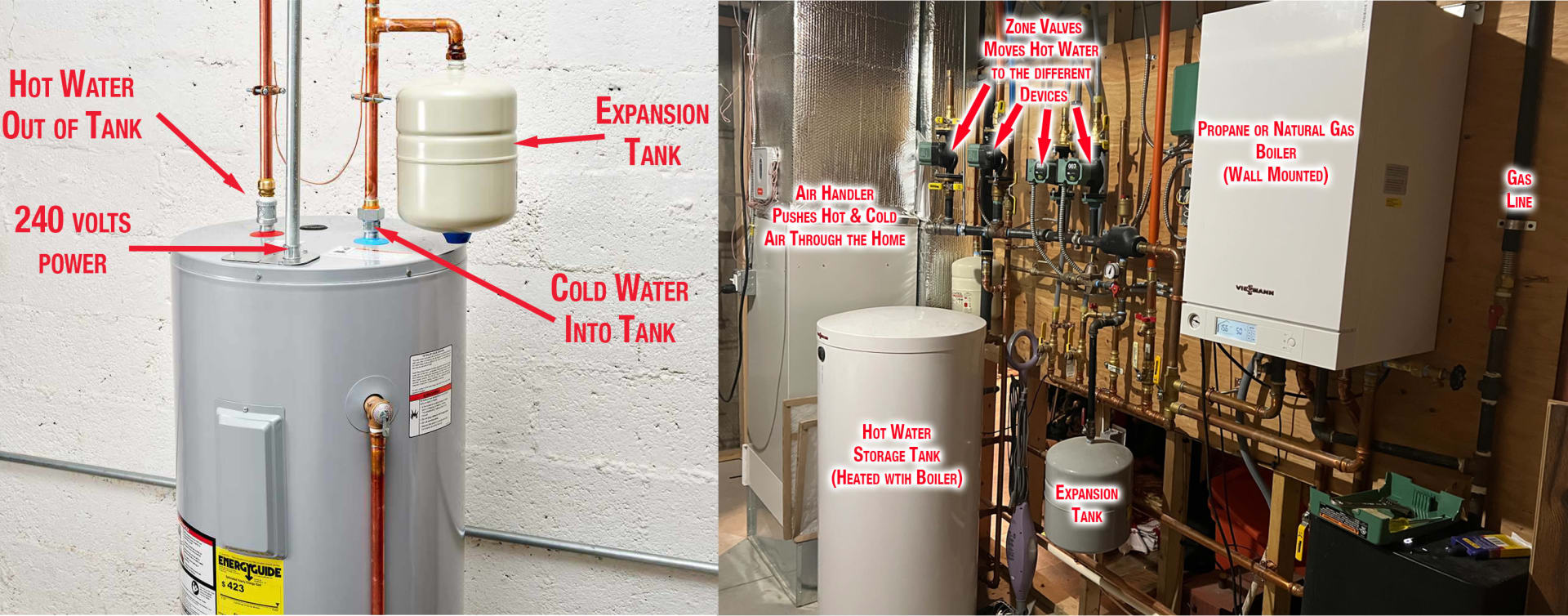
Here is a typical Electric Hot Water Heater and next to it is a Hydronic System with Propane as the heating fuel, wall mounted boiler, storage tank for hot water, and an air handler that moves the hot and cold air through the home. The Hydronic system is a whole house heating system including hot water.  The air handler also provides AC to the home.

If you want to use a conventional hot water heater then you have many sizes (40 gallons is the most popular, but larger families are moving to 60-80 gallons these days).  Your choices are natural gas or propane, oil, or electric.  Electric does not need a vent, but the other choices need a vent.

A note for oil run boilers/furnaces or hot water tanks – you do not need a chimney to vent the units, you can have a power vent installed so the heat and fumes are run through a vent in the side of the house, and it uses a fan to move lots of air with the heat & fumes though the vent to keep the temperature of the vented gases down.

Hope you enjoyed this BLOG, please come back for more.

About The King Team

David & Fiona King - The King Team, are a dynamic duo leading a group of seasoned professionals specializing in various real estate sectors. The team's broad expertise spans new home construction, sub-division and land development, commercial property, and multi-family and single-family homes.

David and Fiona are committed to making the buying or selling journey enjoyable and informative. The team prides itself on excellence in customer service, always prioritizing their client's interests in every transaction. Contact them today to get started!

Beyond their real estate prowess, The King Team also holds expertise in Lake Home Sales & Acquisition, Land Development & Commercial Real Estate, providing a comprehensive service to their clients. The team is devoted to realizing their clients' real estate dreams and is eager to cultivate long-lasting relationships built on trust and mutual respect.

David & Fiona King - The King Team, have over 40 years of experience and over 125 five-star reviews. With their top-tier service and professional guidance, you can confidently navigate your next real estate journey.

NO OTHER AGENTS do what the KING TEAM does for their sellers. From the custom signs, large EDDM mailers, 3D Virtual Tours, and so much more – call the King Team to discuss listing your home. Call 888.THE.KING - 888.843.5464
Posted in Resources