



What it costs to run a home: water
Shallow wells, deep wells and town water compared, a simple whole house filter and softener setup, and how water heaters and hydronic systems make hot water.
Read the articleWhat it costs to run a home: water


(256) 803-5600
REMAX PATRIOT REALTY




Heating zones, the fuels that heat a home, and how the heat moves through it, from oil boilers to pellet stoves.
There are so many ways to heat a home today, from hot water to electric. Let me take you through them all to give you a better understanding.
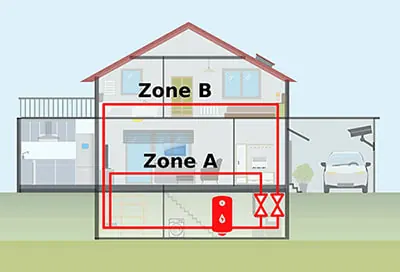
A zone is a part of the home controlled by a thermostat that sets the amount of heat going to that part of the home. The more zones, the more control you have over the heating in the home. A great home for heat efficiency will have a zone in the master bedroom; one in the living room area, typically including the kitchen and dining room; one in the bedrooms upstairs; one in the basement; and sometimes one in the garage. The more zones, the more expensive the system is to install, but the more you save down the road in fuel costs.
For example: you only sleep in the master bedroom from 10:00 pm to 7:00 am, and you like to sleep at 70 degrees. So you set the thermostat to 70 degrees from 10:00 pm to 7:00 am, and the rest of the time you set it at 62 degrees. If you work during the day, set the home at 62 from 8:00 am to 4:00 pm, and when you get home at 5:00 pm the home will be warm for you. If you have kids coming home at 3:00 pm, move the heat to start at 2:00 so the home is warm for them. Follow this logic around the home and you can save hundreds of dollars over the year. Believe me, if you plan on staying in the home for many years, the savings will be much more than the increased cost of the installation. Plus, your home's value will be higher with the extra zones.
To get heat into a home you need a fuel. The most common are heating oil, natural gas, propane, wood and electricity.
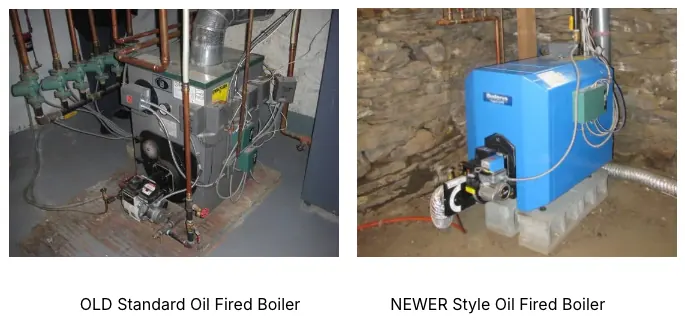
Oil is a very common way to heat your house. Basically, home heating oil is the same as diesel fuel. The only real difference is that the diesel you buy from the pump has a dye in it to make it colored, so if you get caught with home heating oil (unmarked diesel) in your vehicle, you could be in for a hard time from the state. Plus, diesel in the wintertime has an additive in it to help stop it from freezing. So if you run out of home heating oil and cannot get the oil company to come out right away, get a 5 gallon gas can, make sure it is empty, go to the gas station, get 5 gallons of diesel and put it in your home heating oil tank. Then you need to purge the oil lines on the burner motor, and you are up and running.
For companies that sell home heating oil, the largest selling feature is that it is safe and that you have many choices of companies that sell it. This is true: you will never hear of a house blowing up from an oil spill. Oil fuel is so safe that it is hard to set on fire, and no spark will ignite it. What they do not tell you is that oil, when burned, is about 80% efficient, depending on your boiler. So for oil and gas to be the same value, you would have to use 20% more oil to get the same heat as gas. Plus, an oil fired furnace (called a boiler) should be cleaned every year. This typically adds about $400 per year to the cost of heating your home.
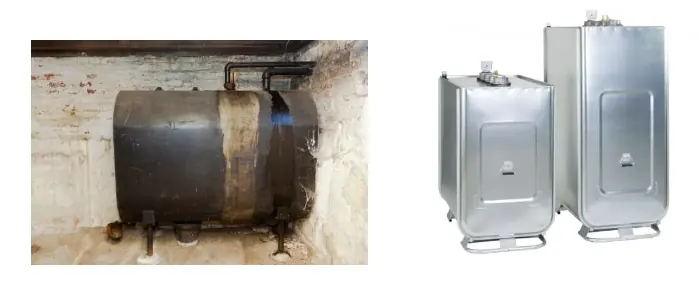
One thing to consider is that you must always check the gauge on your oil tank, just like your car, unless you are on auto fill from your oil company. Oil tanks come in two types: the old standard steel 250 gallon tanks and the new dual wall modern tanks. The old tanks today only come with a 3 year warranty; the new tanks come with a lifetime warranty. Yes, the new tanks cost more, but they are much safer and will last a long time.
Oil can run your boiler or furnace and your hot water heater, but not much else.
The argument that oil is cheaper than gas is very hard to make. When oil is down around $2 per gallon, a good argument can be made that yes, oil is cheaper. But the price of crude oil can jump drastically, and when it does, the price of heating oil jumps too. Gas companies are much slower to respond; they can take months or a year to change the price either up or down.
Natural gas is a good choice for many people, but you must have natural gas on the street to get it into your home. Natural gas comes from the large utility companies (National Grid, Unitil, etc.), and sometimes this is the same company that provides your electricity. Natural gas can run your heat, dryer, stove, oven, hot water tank, gas grill, fire pit, lanterns and more.
You can convert many boilers over to natural gas; in a lot of cases the cost is about $2,000. This is something the gas company might do for very little money, or you can hire an independent HVAC person to do the conversion.
If you are in an area that does not have natural gas, you can choose propane. The same devices in your home that can run on natural gas can also use propane. The only modification you must make is to change over the gas flow control, as propane is under much more pressure than natural gas. These changeover kits are not expensive, but most of the time they require a professional to install them.
A warning here: natural gas and propane are very dangerous. Do not attempt to work on any devices or appliances that use either of these gases, or touch the gas lines, as this could cause a leak, and this is how a home blows up.
Here is something that you might not know: when you order propane for your home or business, it requires a tank. Tanks are typically sized for the building, and these days most of them are underground, with the lines running underground to the building. Most tanks cost about $2,500 installed, but if you do not pay for the tank at the time of installation, you will pay more per gallon for your propane. When I moved into our new home, the cost of propane was $3.10 per gallon. When I went online to check other prices, I got prices of $1.58 per gallon. Wow, was I upset. I found out that the difference was the price of the tank. So I asked the natural, logical question: "When I pay off the tank with the extra money I am being charged, will the price of my propane go down?" The answer was no. So basically, after I have paid for the tank, I will still be paying 70% more for my home heating than the person who paid for the tank upfront. Plus, I am locked into this propane company forever. Not cool.
The price per gallon you get for propane is based on usage. Do not be shy: call the company and tell them what you are using. I have my garage, BBQ grill, fire pit and other devices connected, so I get the best rate, as I use a lot of propane.
One more bit of good news: because I am using propane (or natural gas), I do not have to pay every year to have my boiler cleaned. These gases burn at 99%+ efficiency. You should clean your gas fired boiler every 4 to 5 years, as dust and dirt can collect in the unit.
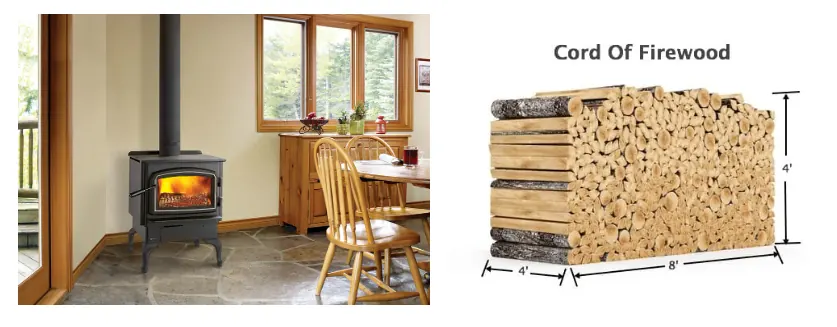
Wood stoves are very popular in homes that have access to wood. Wood stoves are a lot of work to keep running, as wood is dirty and heavy, and you need a lot of it to heat a home. You can spend a good part of the summer and fall cutting and chopping wood to heat your home over the winter. You can also buy wood, which is sold by the cord. A cord of wood is a stack that is 4' x 4' x 8' in size. Now, most of the people who deliver split wood just put it in a dump truck and call it a cord, so you are not assured of getting more or less than a cord of wood. You can also choose dried wood that is a season old, or green wood that is freshly cut. Dried wood is always best.
A cord of mixed hardwood, when burned, produces approximately 19 million BTUs of heat. It takes 135 to 140 gallons of #2 home heating oil to equal that amount of heat. A cord of firewood in this area costs approximately $250 to $300, and #2 fuel oil fluctuates. Oil prices would have to be at $1.85 to $2.22 per gallon to equal the value of wood, but there is no labor involved in home heating oil.
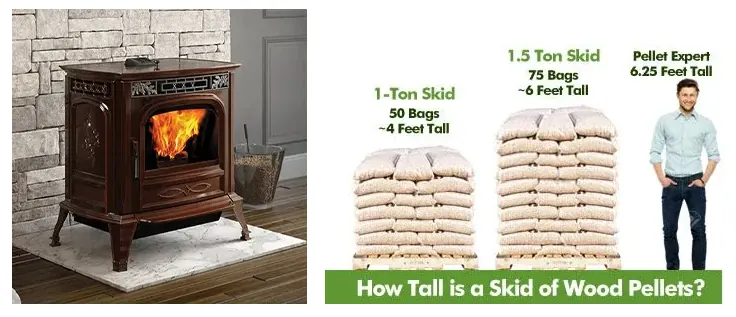
Pellet stoves are great, clean and easy to run. You buy bags of pellets; typically each bag is 40 lbs. You get 50 bags on a 1 ton pallet. Most stores that sell pellets sell them by the ton, and they are much less money by the ton. Most of them deliver.
The cost of a ton of pellets is almost the same as a cord of wood, but pellets offer 12% less volume than a cord of wood. As a result, to justify a pellet stove (assuming you already own the stove), home heating oil would have to be at $2.07 to $2.50 to equal the cost of pellets.
Keep in mind that whether you use a pellet stove, a wood stove or an oil boiler or furnace, it all depends on the quality of the unit, the efficiency of the unit and how clean you keep it.
Oil in general is 80% efficient in boilers and furnaces, but some of the newer ones claim 90%. Natural gas and propane are 78 to 89% efficient (most units today run at 98%). Wood stoves are typically 50 to 70%, and pellet stoves are 79 to 83%.
This was covered in the article on electricity, but let's just say it is a very expensive way to heat a home.
Now that you have a better understanding of how the heat is created, let me take you through how the heat is transferred to the different parts of the home.
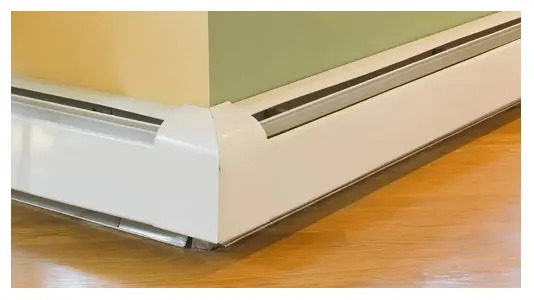
The most popular is hot water or electric, via baseboard heat or radiant heat in the floor (most radiant systems are water, but some are electric). The next is forced hot air from ducts through the house. This is where you see holes in the floor and ceiling that are covered by vent covers. Some vents feed the rooms with heat, and the others take the air back down to the heating unit to recycle it. With a forced air system you can, in many cases, add A/C to the system. With hot water baseboard or radiant heat, you cannot.
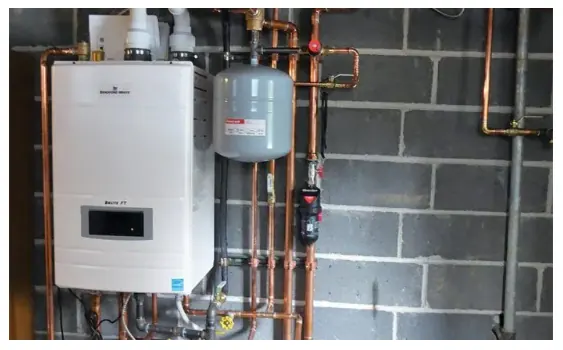
Most homes use hot water to heat the home, and all baseboard units that are not electric use hot water to distribute the heat around the rooms and the home. Somewhere in the home is a unit that heats the water, and a circulator motor moves the hot water to different parts of the home: 1 circulator motor per zone. Today many new homes have tankless, on-demand heating systems that heat the water as you need it. Most of these systems use natural gas or propane to make the heat, as they are very efficient, and the units are about the size of one kitchen cabinet.
Older homes, and homes that use oil to make the heat, use a boiler (what some people call a furnace). The boiler is a unit, typically found in the basement, with a motor on the front that ignites oil mixed with air, which is shot into a chamber where the fire heats up chambers full of water. As the thermostats call for heat, the circulators turn on and pull the hot water from the boiler; the boiler sensor detects the water temperature dropping and starts up the blower motor.
A boiler can also feed a hydronic system that sends hot air through the home. These are the preferred system in most homes today. The home will have a unit called an air handler, typically one in the basement and one in the attic. The water lines are fed to the air handler, and as the thermostats call for heat, the circulator sends hot water through the lines to the air handler. A fan in the air handler kicks on to force the air in the house through a part inside the air handler that looks like a car radiator. In fact, it basically is a radiator, but in reverse. This system is chosen for most homes because it does not dry out the air and allows for central AC in the home.
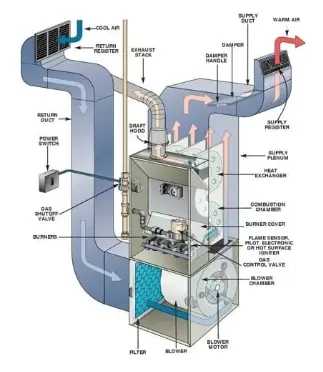
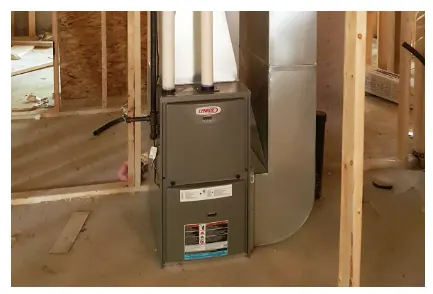
The furnace is a unit that heats air and then sends the hot air through the home. A furnace can use oil, natural gas, propane, wood, coal, corn, pellets and more to heat the air. These systems are not as popular in new homes today because they do not allow for an AC unit to be attached to them for central air, and they dry out the air in the home more than hydronic systems.
Heat pumps will be reviewed in a blog post on AC, as they are almost always part of an HVAC (heating, ventilation and air conditioning) system.
We hope you have enjoyed this blog. Please keep coming back for more helpful information.
David and Fiona King of The King Team are a dynamic duo leading a group of seasoned professionals specializing in various real estate sectors. The team's broad expertise spans new home construction, subdivision and land development, commercial property, and multi-family and single-family homes.
David and Fiona are committed to making the buying or selling journey enjoyable and informative. The team prides itself on excellence in customer service, always prioritizing their clients' interests in every transaction. Contact them today to get started.
Beyond their real estate prowess, The King Team also holds expertise in lake home sales and acquisition, land development and commercial real estate, providing a comprehensive service to their clients. The team is devoted to realizing their clients' real estate dreams and is eager to cultivate long-lasting relationships built on trust and mutual respect.
David and Fiona King of The King Team have over 40 years of experience and over 125 five-star reviews. With their top-tier service and professional guidance, you can confidently navigate your next real estate journey.
No other agents do what The King Team does for their sellers. From the custom signs, large EDDM mailers, 3D virtual tours and so much more, call The King Team to discuss listing your home at 888.THE.KING (888.843.5464).
Shallow wells, deep wells and town water compared, a simple whole house filter and softener setup, and how water heaters and hydronic systems make hot water.
Read the articleWhat it costs to run a home: water
How to size a generator from your electric bill, why propane beats gasoline, what portable and whole house units cost, and why a UPS keeps your router running.
Read the articleWhat it costs to run a home: generators
How power reaches your panel, how to read the bill, and what one porch light, an old garage fridge and electric baseboard heat really cost to run each month.
Read the articleWhat it costs to run a home: electricity
Discover why we are rated #1 in buying and selling real estate in Lewis Smith Lake, Cullman, Jasper and the surrounding areas.
David and Fiona King lead The King Team at RE/MAX Patriot Realty, with expertise spanning new home construction, land development, commercial property, lake homes and single-family homes across Cullman, Jasper and Lewis Smith Lake. Call 256.803.5600 or 888.THE.KING, or visit the office at 3850 AL 69 S, Cullman, AL 35057.

Broker & Owner
“Your realtor should be your advisor, to protect you, and help you find the ideal home/property for your wants and needs.”256.803.5600Email David



Get instant property value now!